
Florida’s 25% rule for windows states that if more than 25% of your building’s exterior, including the windows, doors, walls, and roof, is replaced within a 12-month period, the entire affected area must be brought up to current Florida Building Code standards. This includes installing impact-resistant or energy-efficient windows in many cases.
Key Takeaways
- Over 25% Rule: If you replace more than 25% of your home’s exterior (windows, doors, walls, or roof) within 12 months, you must fully comply with the latest Florida Building Code.
- Impact & Energy Standards: All replacements must meet current impact resistance and energy efficiency requirements.
- 12-Month Rolling Calculation: The 25% is calculated over any rolling 12-month period, even if done in phases.
- Stricter in HVHZ: Miami-Dade and Broward counties have tougher rules, often requiring impact-rated products by default.
- Permits Required: Exceeding 25% means you need permits, licensed contractors, and inspections.
- Financial Benefits: Code-compliant upgrades can lower insurance, raise home value, and improve efficiency.
- Avoid Costly Mistakes: Not following the rules can lead to fines, failed inspections, or delays.
- Professional Help Advised: Work with a licensed contractor for accurate compliance and smoother approvals..
What Does Florida’s 25% Window Rule Mean?
The 25% rule is a Florida Building Code regulation. It mandates that when more than 25% of a building’s exterior envelope (walls, doors, windows, and roof) is altered within any 12-month period, the affected areas must comply with the latest building code.
For Windows, this usually means:
- Installing impact-resistant glass (especially in hurricane-prone areas).
- Meeting updated energy efficiency standards.
- Properly securing frames to resist wind uplift.
Its purpose is to strengthen safety measures and safeguard properties against extreme weather.
Why the 25% Rule Matters in Florida
Living in Florida comes with unique responsibilities, especially when it comes to protecting your home from hurricanes. That’s why building codes here are more rigorous than in many other states. One such code is the 25% rule, which can significantly impact any renovation involving windows.
If you’re planning a remodel or replacing old windows, this rule might apply to you. Understanding it now can save you from fines, failed inspections, and unnecessary expenses later.
When Does the 25% Rule Apply?
The rule applies under these conditions:
- You’re replacing or modifying more than 25% of the building envelope.
- Work occurs within a 12-month period.
- The building is located in Florida and subject to the Florida Building Code.
If your renovation stays under 25%, the updated code requirements may not apply. But once you hit 25.1%, everything changes.
History and Purpose Behind the 25% Rule
Building codes were drastically altered following Hurricane Andrew’s 1992 devastation of Florida. The state introduced stricter regulations to improve safety and structural resilience.
The 25% rule was added to ensure older buildings are gradually brought up to modern standards. This helps protect both property and people without forcing homeowners to completely rebuild.
Understanding the Florida Building Code Requirements
The Florida Building Code includes several requirements relevant to windows:
- Impact resistance in High-Velocity Hurricane Zones (HVHZ).
- Energy efficiency standards (U-factor, SHGC ratings).
- Water infiltration and structural integrity tests.
- Anchoring and installation guidelines.
These standards apply to every window when over 25% of them are being replaced.
Calculating the 25% Threshold: Examples and Formulas
Step-by-Step:
- Measure the total square footage of exterior walls, windows, doors, and the roof.
- Determine the square footage of the renovation area.
- Divide the renovation area by the total envelope area to get the percentage.
Example:
- Total building envelope = 4,000 sq ft.
- Window replacement = 1,100 sq ft.
- 1,100 / 4,000 = 27.5% → Rule applies.
Table: Quick Reference for 25% Threshold Calculation
| Component | Measurement Example | Included in Envelope? | Notes |
| Total Building Envelope | 4,000 sq ft | Yes | Includes all exterior surfaces |
| Area of Window Replacements | 1,100 sq ft | Yes | Must be compared to total envelope area |
| Percent of Envelope Replaced | 27.5% | — | Over 25%, rule applies |
| Code Compliance Required? | Yes | — | Impact windows, permits, inspections needed |
Impact on Renovation Projects and Window Replacements
Crossing the 25% threshold changes everything. Here’s how:
- You need a permit.
- You must hire a licensed contractor.
- All new windows must meet modern code.
- Inspection is mandatory.
Ignoring this rule can lead to failed inspections and even fines.
Window Code Compliance: What Needs Upgrading?
If the rule applies:
- Every replaced window must either be impact-rated or secured with shutters.
- Glass must meet energy efficiency ratings.
- Window frames and anchors must be updated.
Your local building department will guide you, but the contractor must ensure compliance.
Hurricane Zones and the Role of Impact Windows
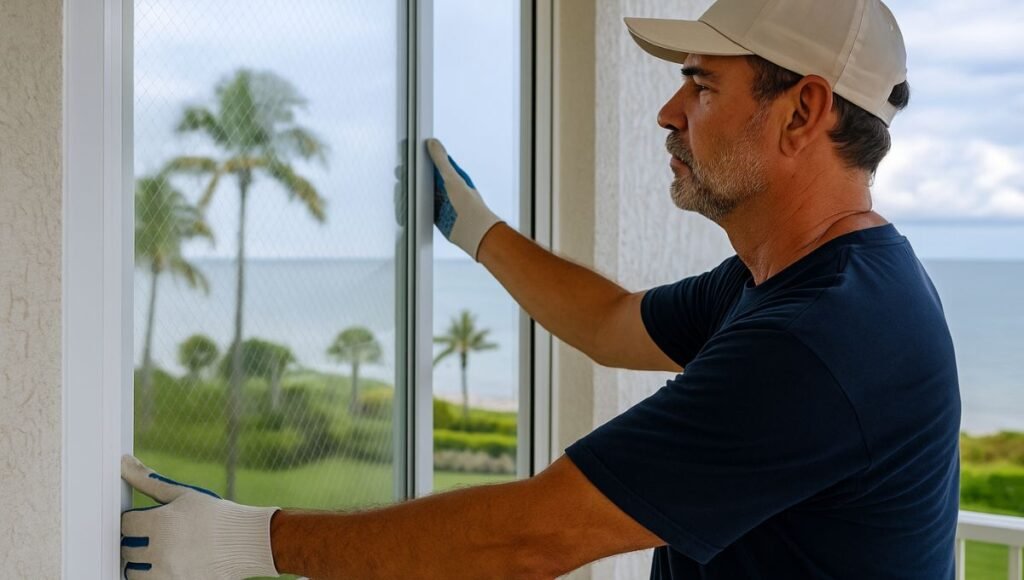
In HVHZ areas like Miami-Dade or Broward County, the rules are even tougher. Impact-rated windows or hurricane shutters are mandatory regardless of the 25% threshold.
These windows:
- Resist flying debris.
- Stay intact under pressure.
- Reduce insurance premiums.
Insurance and Energy Efficiency Benefits
While compliance might seem expensive, it offers long-term benefits:
- Lower insurance premiums for impact protection.
- Better energy savings due to newer glass technology.
- Increased property value.
Some homeowners even qualify for state or federal rebates.
3 Common Mistakes and Misunderstandings
- Thinking the rule doesn’t apply to DIY projects.
- Not calculating the total envelope correctly.
- Replacing 26% of windows and skipping permits.
Always consult a contractor and pull permits.
Exemptions and Special Cases
Certain properties may be exempt:
- Historical buildings.
- Mobile homes.
- Projects with waivers (rare).
Speak to your local authority before starting work.
Contractor and Permitting Tips
- Choose a licensed contractor.
- Pull permits in advance.
- Ask about inspection requirements.
- Keep documentation for resale.
A good contractor will handle most of the legwork.
Final Thoughts: What Is the 25% Rule for Windows in Florida?
Understanding Florida’s 25% window rule goes beyond simply passing inspections. It’s about safeguarding your home, family, and investments.
If you’re planning any major exterior work, calculate your totals carefully. Consult a local professional, and always prioritize code compliance. The costs today are nothing compared to the savings and safety you gain tomorrow.
Frequently Asked Questions
What are the window rules in Florida?
The Florida window codes require all windows to be impact resistant. The glass must be strong to withstand any wind from either part of the state.
What if I replace 24% now and 10% next year?
The rule uses a rolling 12-month window. Both projects could count.
Are condos and townhouses included?
Yes, if you’re responsible for your unit’s exterior.
Do I need a permit to replace windows in Florida?
Yes, window replacements typically require a building permit from your local municipality. This ensures the new windows meet Florida Building Code standards, especially for energy efficiency and hurricane resistance.
Can I get financial help for window replacements in Florida?
Yes, homeowners may qualify for federal or state-funded programs like the Weatherization Assistance Program or local utility rebates. Eligibility often depends on income level, energy usage, and property type.
Are impact windows required statewide or just in hurricane zones?
While impact windows are mandatory in High-Velocity Hurricane Zones (HVHZ), they are strongly recommended statewide. Many insurance companies also offer discounts for homes equipped with hurricane-rated windows.
How can I verify if my windows are up to code?
Look for certification labels like “DP” (Design Pressure) or “Impact Rated” on the window frame. You can also consult your installer or local building department to confirm compliance with Florida codes.
Will new windows reduce my energy bills?
Yes, energy-efficient windows with low-E coatings and double glazing can significantly reduce cooling costs in Florida’s hot climate. They help maintain indoor temperature and reduce HVAC strain, leading to lower monthly utility bills.
How long does a window replacement project take?
A typical window replacement for a standard-sized home may take 1–3 days. However, project length varies based on the number of windows, permit approvals, product availability, and weather conditions.

 PREMIUM IMPACT